latest posts

These international destinations are about to get costlier for tourists
Lifestyletravel

These international destinations are about to get costlier for tourists

Travellers heading abroad in 2026 may need to budget more, as several countries prepare to introduce new tourist taxes aimed at managing over-tourism and supporting local infrastructure. Governments in Thailand, Japan, Norway, Greece, Italy, and Spain are implementing or expanding levies to fund public maintenance, crowd control, and sustainable tourism measures.

Thailand: Tourism entry fee from February 2026

Thailand will start charging foreign visitors a 300-baht entry fee, known locally as ‘Kha Yeap Pan Din’, from February 2026. The amount will be collected on all arrivals by air, land, and sea. Of the total, 70 baht will provide travel insurance coverage, while the remainder will support infrastructure upgrades and emergency services. The fee will be collected by airlines and border authorities, with possible exemptions for work-visa holders and frequent travellers.

Japan: New hotel tax and Mount Fuji fee

Japan is expanding its over-tourism measures with a new tiered hotel tax in Kyoto starting March 2026. Rates will range from ¥200 for budget stays to ¥10,000 per night at luxury hotels. Authorities expect to raise ¥12.6 billion annually for transport improvements and crowd-management efforts. In addition, climbing Mount Fuji now requires an advance reservation and a ¥4,000 entry fee, with a daily cap of 4,000 climbers to improve safety and reduce congestion.

Norway: Municipal tourism levy

Norway plans to introduce its first national tourist tax by summer 2026. Municipalities will be allowed to charge up to 3% on overnight stays and cruise visits to ease pressure on local infrastructure in fjord towns and Arctic regions. Popular ports such as Bergen, Geiranger, and Tromsø are likely to be among the first to implement the fee, which will fund the maintenance of trails, toilets, and parking areas.

Greece: Cruise passenger fees at Island Ports

Greece has introduced a disembarkation fee for cruise passengers to tackle crowding on popular islands. Travellers will pay €12 in Santorini and Mykonos and €3 at smaller island ports during regular months, rising to €20 and €5 in peak season. The revenue will fund port upkeep, waste management, and crowd-control measures as the country manages record cruise arrivals.

Venice: Day-tripper fee

Italy’s Venice reinstated its day-visitor entry fee this year with higher charges for late bookings. The €5 levy doubles to €10 for reservations made within three days of arrival. It applies on 54 high-traffic days between April and July, with QR code registration required for entry. The measure generated €2.4 million in 2024 and aims to better manage the city’s growing number of short-term visitors.

Spain: Regional and city tourism taxes

Spain continues to expand its tourist tax system, particularly in Catalonia and Barcelona, where visitors now pay €4 per night, set to rise to €5 in 2026 and €8 by 2029. Other regions, including Galicia, the Basque Country, and the Balearic Islands, are introducing similar charges on accommodations and cruise stops. Funds will be directed toward heritage preservation and environmental projects under new national sustainability guidelines.

These measures reflect a global shift toward responsible tourism. While adding modest costs for travellers, they are introduced to preserve destinations, ease local strain, and ensure that tourism growth benefits both visitors and residents.

Read More
10 epic vacations you must experience at least once in your lifetime
travel

10 epic vacations you must experience at least once in your lifetime

From Japan’s cherry blossoms to Kenya’s safaris and Canada’s Northern Lights, discover 10 extraordinary bucket-list vacations every traveler should experience. Read more for travel inspiration.

Some journeys change you forever — not because of where you go, but how the world feels when you’re there. From chasing the Northern Lights to wandering beneath Japan’s cherry blossoms, these ten extraordinary vacations promise adventure, awe, and that unmistakable feeling of being alive in the world.

1. Chase the Northern Lights Across the Arctic Sky

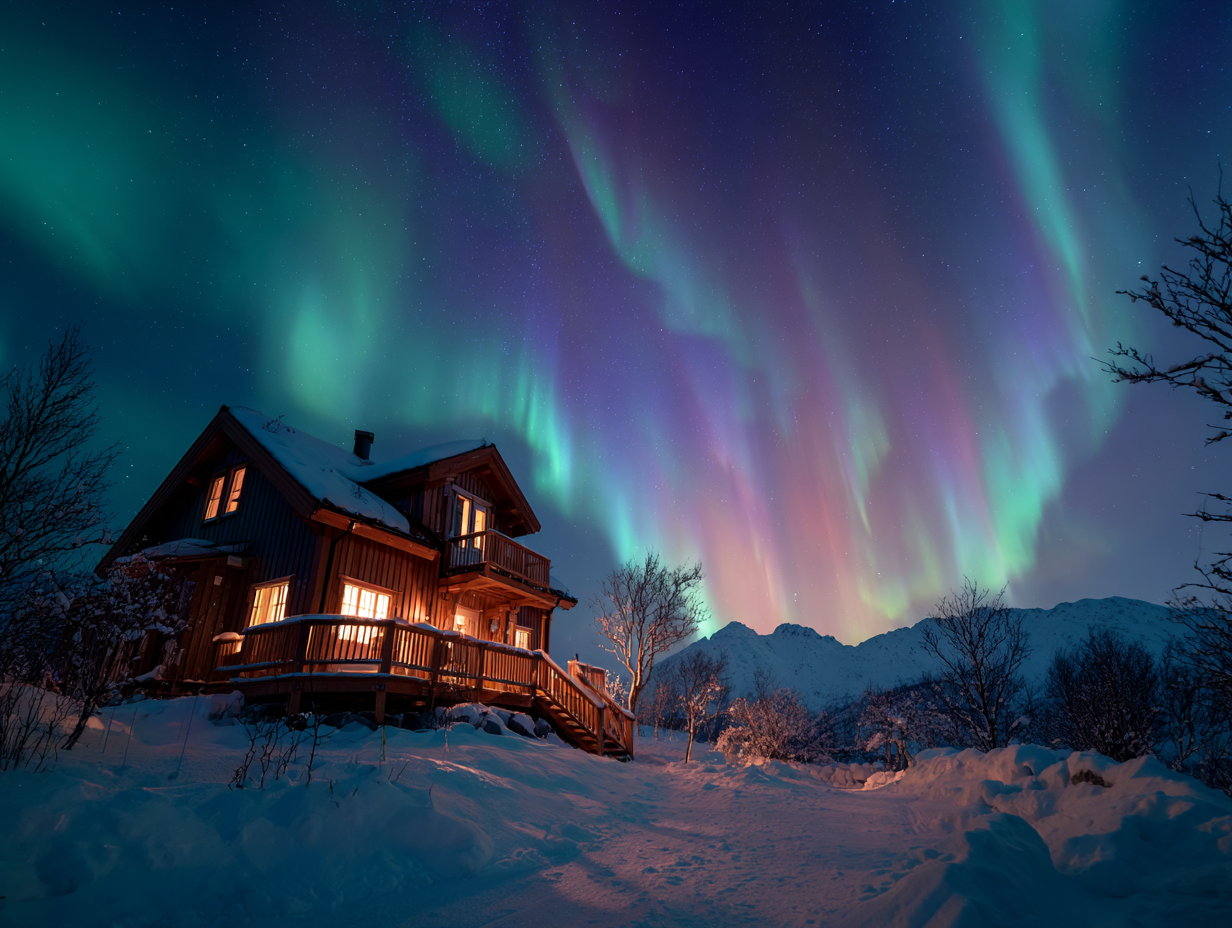
There’s pure magic in watching emerald and violet ribbons dance above a frozen landscape. From Canada’s Yukon and Northwest Territories to Iceland, Norway, and Finland, the Aurora Borealis paints the heavens in surreal hues. Cozy up in glass igloos, remote cabins, or Arctic lodges as the night sky turns into nature’s grandest light show — an experience that feels less like travel and more like transcendence.

2. Wander Beneath Japan’s Cherry Blossoms

Come spring, Japan blushes in pink. From Kyoto’s Philosopher’s Path to Tokyo’s Ueno Park, cherry blossoms flutter like confetti in slow motion. Locals picnic under the petals, strangers become friends, and for a fleeting moment, the world feels impossibly beautiful.

3. Trek Through Vietnam’s Emerald Rice Terraces

In Sapa’s mist-covered highlands, rice terraces ripple down mountains like green silk. Morning fog lifts to reveal farmers in conical hats tending their fields — a living postcard of patience, rhythm, and grace. It’s slow travel at its most soul-stirring.

4. Safari Like an Explorer in Kenya’s Wild Heart

The sun rises over the Masai Mara, spilling gold across endless plains. Here, lions yawn awake, elephants march in silhouette, and time itself seems to pause. Staying in a private conservancy lets you feel Africa’s pulse without the crowds — pure, raw, and unforgettable.

5. Float Above Turkey’s Surreal Landscapes

In Cappadocia, dawn paints the sky in shades of apricot and rose as hundreds of hot-air balloons rise silently over honey-colored canyons. Below, fairy chimneys and cave dwellings whisper stories of ancient civilizations. Few moments rival this — serenity suspended in air.

6. Ride the World’s Most Romantic Train

Step aboard the Venice Simplon-Orient-Express, and you’re instantly transported to another era. Crystal glassware clinks in vintage dining cars as Alpine peaks rush past your window. Between Paris and Venice, luxury feels timeless — more experience than transport, more dream than journey.

7. Cruise Through Patagonia’s Edge-of-the-World Beauty

Patagonia is where Earth shows off. As your ship drifts past towering glaciers and wind-sculpted fjords, the world feels vast yet intimate. Dolphins dance in the wake, condors soar overhead — it’s a reminder that wild beauty still reigns in the far south.

8. Explore Ireland’s Ancient Mysteries

In Ireland, the land itself tells stories. From the Ring of Kerry to the Giant’s Causeway, every moss-covered ruin and misty cliff carries a whisper of myth. It’s a country best discovered slowly — over pints, poetry, and roads that wind like memory.

9. Master the Art of Slow Travel in Tuscany

Here, time tastes like olive oil and red wine. In Tuscany, days stretch long and lazy among sun-drenched vineyards and stone villas. You’ll learn that joy lives in simple things — a shared meal, golden light, and the art of doing absolutely nothing.

10. Adventure Through Costa Rica’s Wild Heart

Nature runs the show in Costa Rica. Volcanoes hiss, waterfalls tumble, and rainforests hum with life. One day you’re ziplining through jungle canopies, the next soaking in a hot spring under starlight. It’s adventure and peace — perfectly balanced.

Read More
Which country is the real land of the rising sun It’s not Japan
travel

Which country is the real land of the rising sun? It’s not Japan

Contrary to popular belief, Japan isn’t the first place to witness sunrise. That honor belongs to Kiribati, a remote Pacific island nation. Its easternmost territory, Millennium Island, is where dawn breaks first globally. This geographical reality, however, contrasts with Japan’s poetic title, rooted in its historical name meaning ‘origin of the sun’.

For generations, Japan has been fondly called the “Land of the Rising Sun.” As soon as one hears the phrase, it evokes images of glowing red dawns over Mount Fuji. One naturally thinks that this must be the place where the sun rises first.

If only this were true! While Japan’s poetic title is deeply rooted in its culture and geography, it’s not the first place on Earth to see the sunrise. That honour belongs to a small island nation scattered across the central Pacific Ocean, literally tucked in a remote corner of the planet. Kiribati is the place where the sun rises first.Nestled in the vast expanse of the Pacific, Kiribati (pronounced Kiribas) is one of the most remote countries in the world. The island nation is made up of a total of 33 atolls and reef islands spread over an area of more than 3.5 million square kilometres. Geographically, Kiribati straddles both the Equator and the International Date Line, two defining markers of time and geography. Wait, there’s more.

Its easternmost territory, Millennium Island (formerly known as Caroline Island), enjoys a distinction that no other inhabited land does: it is the first place on Earth to see the sunrise each day.

When the world transitions from one day to the next, dawn first breaks over this small, unspoiled coral island fringed by turquoise waters and palm trees.

As interestingly as this is, this wasn’t always the case. Before 1995, the International Date Line, an imaginary line that separates one calendar day from the next, cut straight through Kiribati. This meant that the country’s western islands operated almost a full day ahead of its eastern islands. For a small nation spread across the ocean, this was both confusing and impractical.

To resolve the issue, Kiribati’s government made a historic decision: it moved the International Date Line 2,000 kilometres eastward, placing the entire country within the same date. The change took effect on January 1, 1995, and as a result, Kiribati became the first country in the world to experience each new day.

The move gained international attention five years later, in 2000, when the world welcomed the new millennium. Kiribati’s Millennium Island was declared the first place to see the sunrise in the year 2000. There’s more. Even the island’s name was changed to mark this symbolic moment. It has since become a point of national pride and global curiosity. So why is Japan still called the “Land of the Rising Sun”? The answer lies in its cultural and linguistic heritage rather than strict geography facts. The Japanese name for the country is Nihon or Nippon, which literally means “origin of the sun.”

This name dates back to ancient times when Japan’s position east of China led to its description as the place where the sun rises. For centuries, Chinese emperors referred to Japan as the “sun’s origin,” and the Japanese adopted this expression as their own.

While Japan’s title is symbolic of its place in the East and its cultural reverence for the sun, geographically, the first sunrise belongs to Kiribati.

Now back to Kiribati, standing on Millennium Island at dawn is like witnessing the very beginning of time. As the sky turns gold and the first rays of sunlight touch the ground, you’re literally standing at the edge of yesterday and today. The island itself is uninhabited. It’s a pristine coral atoll that remains one of the most untouched places on Earth.

Though travel to Millennium Island is restricted due to its remote location and fragile ecosystem, visitors to Kiribati’s main islands, such as Tarawa Atoll, can still experience the serenity of this oceanic nation. With its crystal-clear lagoons, abundant marine life, and traditional Micronesian culture, Kiribati offers a timeless, off-the-grid escape. However, Kiribati’s position in the middle of the Pacific also makes it one of the world’s most climate-vulnerable nations. Rising sea levels threaten its low-lying islands, some of which sit barely two metres above sea level. In recent years, Kiribati has become a symbol of both beauty and fragility. This is a country at the frontline of climate change, where the world’s first sunrise meets the looming challenges of a warming planet.

While Japan remains the “Land of the Rising Sun” in spirit, a reflection of culture, history, and identity, the Republic of Kiribati is the place where the sun actually rises first on Earth. It is where a new day, a new year, and even a new millennium began.Kiribati may seem small and distant, but every sunrise there marks the start of a new day for the entire world. Who knew that this quiet corner of the Earth could hold the brightest and the very first light?

Read More
Affordable transport tips for exploring South Africa
Lifestyletravel

Affordable transport tips for exploring South Africa

South Africa is a large country with a wide mix of landscapes, cities and coastal escapes.

Moving between them can be expensive if you do not plan ahead. The good news is that there are several reliable and cost effective ways to get around. With a few smart choices you can explore more and spend less.

Choose budget friendly domestic flights

Flying remains one of the fastest ways to travel between major cities. Prices can vary a lot, which means flexibility is your best tool. Book early, travel midweek where possible and compare fares across different airlines. South Africa’s budget carriers offer competitive prices and frequent routes between Cape Town, Johannesburg, Durban and regional hubs like Gqeberha or East London.

If you want to make your trip even easier, travel with hand luggage only. It reduces fees and saves time at the airport. It also helps you move quickly between destinations once you land.

Take advantage of long distance buses

South Africa has a strong network of long distance buses and many locals rely on them for cross country travel. This makes them consistent and relatively affordable. They stop at major towns and cities which gives you plenty of freedom when planning an itinerary. Choose a reputable operator and look for routes that run overnight. You save money on accommodation and you wake up in a new destination ready to explore. Modern buses often include air conditioning, charging points and reclining seats which make longer trips more comfortable.

Use the train for scenic slow travel

Rail travel in South Africa is not as fast as flying or driving. It is however a memorable and cost effective way to see the countryside. Main routes connect Johannesburg, Cape Town and Durban. The journey is slower which means you get expansive views of mountains, valleys and small rural towns. If you prefer slow travel and want to stretch your budget, this option offers good value. It is also ideal for travellers who are not in a rush and want the experience to be part of the holiday.

Rent a car only for focused road trips

A rental car gives you total freedom. It also comes with fuel costs, tolls and insurance. The best approach is to rent one only for sections of your trip that truly need it. For example, the Garden Route is ideal for self drive travel. So is the Panorama Route and the West Coast. Instead of keeping a car for your entire holiday, combine transport methods. Fly between cities then rent a small or fuel efficient car for shorter legs. This keeps your overall spend far lower while still giving you a flexible way to explore scenic regions.

Rideshares

Rideshare apps and community platforms have become increasingly popular with locals. They can be one of the most affordable ways to move around if you know how to use them effectively. A pro tip to getting the best prices is to pre-book your ride which locks in the price so that it won’t end up fluctuating in the events of traffic or any events that might affect the length of the trip. Also, booking during what could be considered “off-peak” hours will lower the price. However, this is not the best option for longer journeys if you are travelling in between places that have train or bus routes.

Use public transport within cities

Each major city in South Africa has its own system of buses or rapid transit services. Cape Town has MyCiTi and Metrorail. Johannesburg has the Rea Vaya network. Durban runs a large and reliable municipal bus service. These options are inexpensive and efficient for short distances. Many routes connect tourist friendly districts which helps you avoid spending too much on e hailing services. Use app based maps to plan your trips in advance and always check the final stop to make sure you end up in the right neighbourhood. It is best to always check schedules ahead of time because transport runs differently and often less frequently during weekends.

Walk and cycle where possible

Some South African cities are more walkable than others. Cape Town’s CBD, Sea Point and parts of Stellenbosch offer safe and scenic pedestrian paths. Walking reduces costs and helps you experience a place in a more intimate way. Cycling is growing fast with several cities rolling out dedicated lanes and bike rentals. It is a cost free or low cost transport option that allows you to enjoy the outdoors while moving between cafés, viewpoints and local attractions.

Book multi destination holiday passes

A few transport companies now offer multi stop or pass style tickets. These are designed for travellers who want to move through the country at a slower pace without paying for each leg separately. If your holiday includes several cities or regions, a pass can reduce overall costs. It also creates a more relaxed itinerary since you do not need to plan every transfer in advance.

Final thoughts

Traveling around South Africa does not need to drain your holiday allowance. With a smart mix of flights, buses, rental cars and local transport you can stretch your budget further than you expect. The key is to stay flexible. Small choices add up quickly and make a big difference to your overall experience.

Read More
1 22 23 24 378
Page 23 of 378


Privacy Policy   |   Contact Us   |   For Advertisers