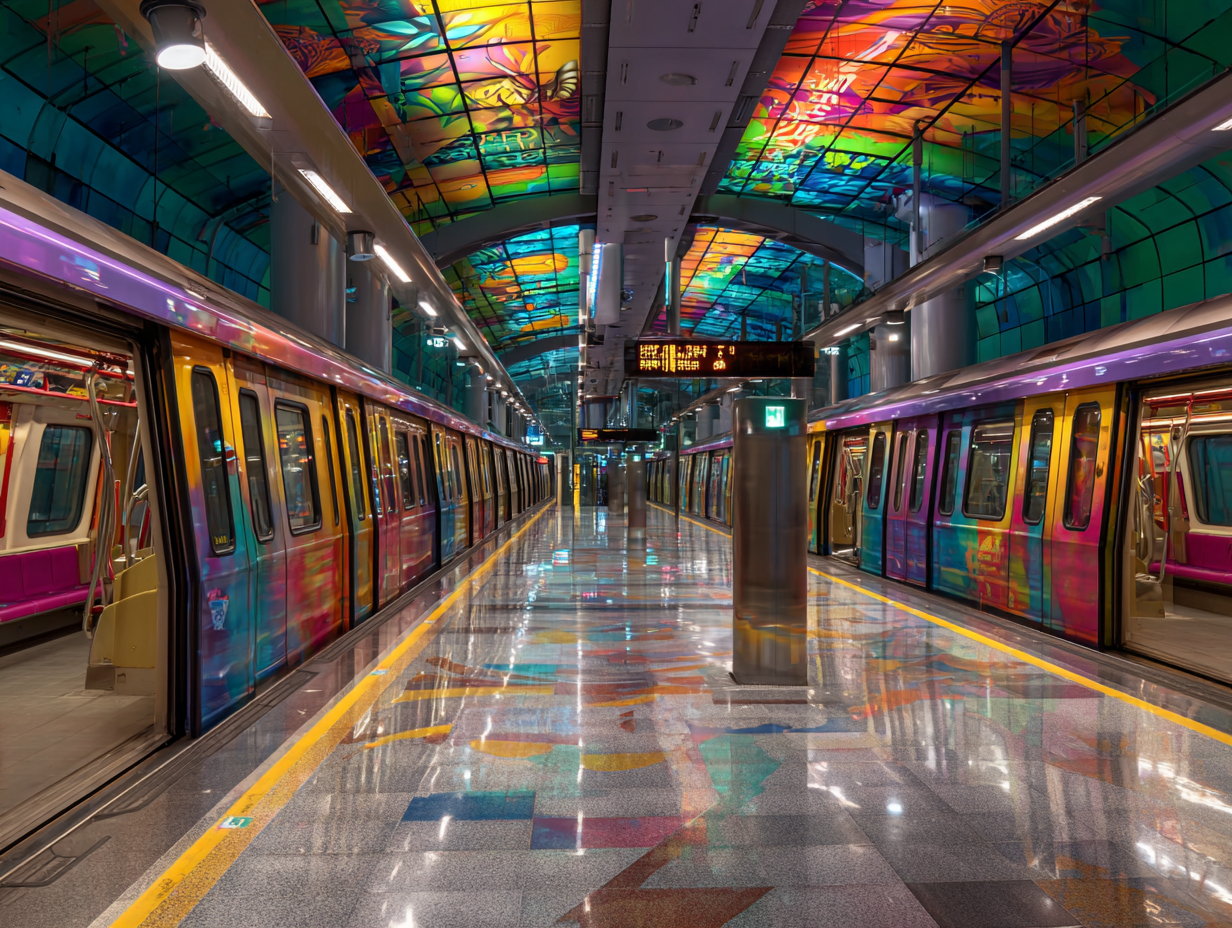

Spotless streets, efficient public transport, and a reputation for order, that’s what most travellers associate with Singapore. But behind that polished image lies a legal system that takes civic discipline very seriously, too seriously at times. The city-state is famously nicknamed the “Fine City,” not just because it’s impressive and world-class, but because breaking certain rules can literally cost you big dollars. From small acts like littering to using your phone while driving, Singapore enforces regulations with penalties that are far stricter than what many visitors may be used to.
For travellers, understanding these rules isn’t about fear, it’s about awareness. Here are some of the fascinating things you need to know before planning a trip to Singapore.
No eating or drinking on MRT trains and stations
If you’re travelling on Singapore’s Mass Rapid Transit (MRT) network, make sure food and beverages stay inside your bag. Consumption of food or drinks is not allowed on trains or within station premises. Violating the rule can attract a fine of up to SGD 500.
Smoking in prohibited areas can be costly
Singapore has some of the strictest anti-smoking laws in the region. Smoking is banned in numerous public places, including bus stops, covered walkways, pedestrian overhead bridges, parks within housing estates, playgrounds, hospital compounds, educational institutions and many more designated zones. Fines for smoking in prohibited areas can range from SGD 200 to SGD 1,000 if prosecuted in court.
Littering can lead to hefty penalties — and public cleaning duties
Singapore’s reputation as one of the cleanest cities in the world is no accident. Littering is taken extremely seriously. First offenders will be fined a maximum of SGD 300. However, if the matter is brought to court, the fines will be much higher, ranging from SGD 2,000 for the first offense, SGD 4,000 for the second offense, to SGD 10,000 for subsequent offenses. Besides that, offenders will also be issued a Corrective Work Order (CWO), where they are required to clean up public areas while wearing a bright vest with the word “offender” marked on it.
Jaywalking is an offense
While in Singapore, be sure to keep your eyes peeled for pedestrian crossings. This is because, in Singapore, crossing the road outside of designated pedestrian crossings or disobeying traffic signals is deemed to be jaywalking. While first offenders will be fined a maximum of SGD 50, subsequent offenders will be fined a maximum of SGD 1,000, and even face the possibility of a jail term of up to three months.
Motorised scooters are prohibited on footpaths
According to regulations enforced by the Land Transport Authority (LTA), motorised scooters, including electric scooters, are not allowed on pedestrian footpaths. Riding such devices illegally on footpaths can lead to fines of up to SGD 2,000. This rule was introduced primarily to improve pedestrian safety following a rise in accidents involving personal mobility devices.
Using a mobile phone while driving is strictly penalised
Using a handheld mobile phone while driving is an offence in Singapore. First-time offenders can face fines of up to SGD 1,000, and may also face imprisonment of up to six months. Repeat offenders may face fines of up to SGD 2,000 and/or imprisonment of up to 12 months. The law applies unless the phone is used hands-free.
Chewing gum restrictions
Singapore introduced a ban on the sale of chewing gum in 1992 to combat littering and vandalism, particularly in public transport systems. Today, the sale of regular chewing gum remains restricted. However, medical gum (dental or nicotine gum) is permissible and can be bought from pharmacies with necessary documents. The import and sale of gum without approval are not allowed.
Failure to flush public toilets is punishable
Yes, in Singapore, even failing to flush a public toilet can lead to a fine. The authorities can impose a fine of up to SGD 150 for not flushing after use.