
Architecture has always been a reflection of the ambitions, beliefs and technological development of civilisations. There are buildings that go beyond the ordinary, which become landmarks around the world because of their enormous size, cultural significance or technological complexity. The financial outlay involved in such buildings can be staggering, and it reveals how countries and corporations use architecture to convey their identity, power and innovation.
According to a feature published by Dubai Sotheby’s International Realty, several iconic structures stand out as the costliest. These buildings range from sacred religious sites and luxury resorts to financial centers and sports arenas, each representing a different purpose yet sharing extraordinary construction costs and global recognition. Let’s have a look at 5 most expensive buildings of the world as per Dubai Sotheby’s International Realty.
Masjid al-Haram, Mecca
Masjid al-Haram in Saudi Arabia is regarded as the most expensive building ever developed, with projected expenditures reaching about $120 billion by 2030. The mosque has evolved over centuries, expanding from a simple early structure into vast multi-level prayer halls supported by modern infrastructure. Recent development phases added enormous prayer space, advanced cooling systems, tunnels, and surrounding facilities to accommodate millions of pilgrims annually, highlighting both its spiritual significance and engineering scale.
Abraj Al Bait (Clock Towers), Mecca
The Abraj Al Bait complex, located close to the Grand Mosque in Mecca, took approximately $15 billion to build. The complex comprises seven towers, with the Makkah Royal Clock Tower standing out as the tallest clock tower in the world, topped with gold. The complex not only boasts an impressive architectural design but also comprises hotels, residential spaces, shopping grounds, helipads, and an Islamic history and astronomy museum.
Marina Bay Sands, Singapore
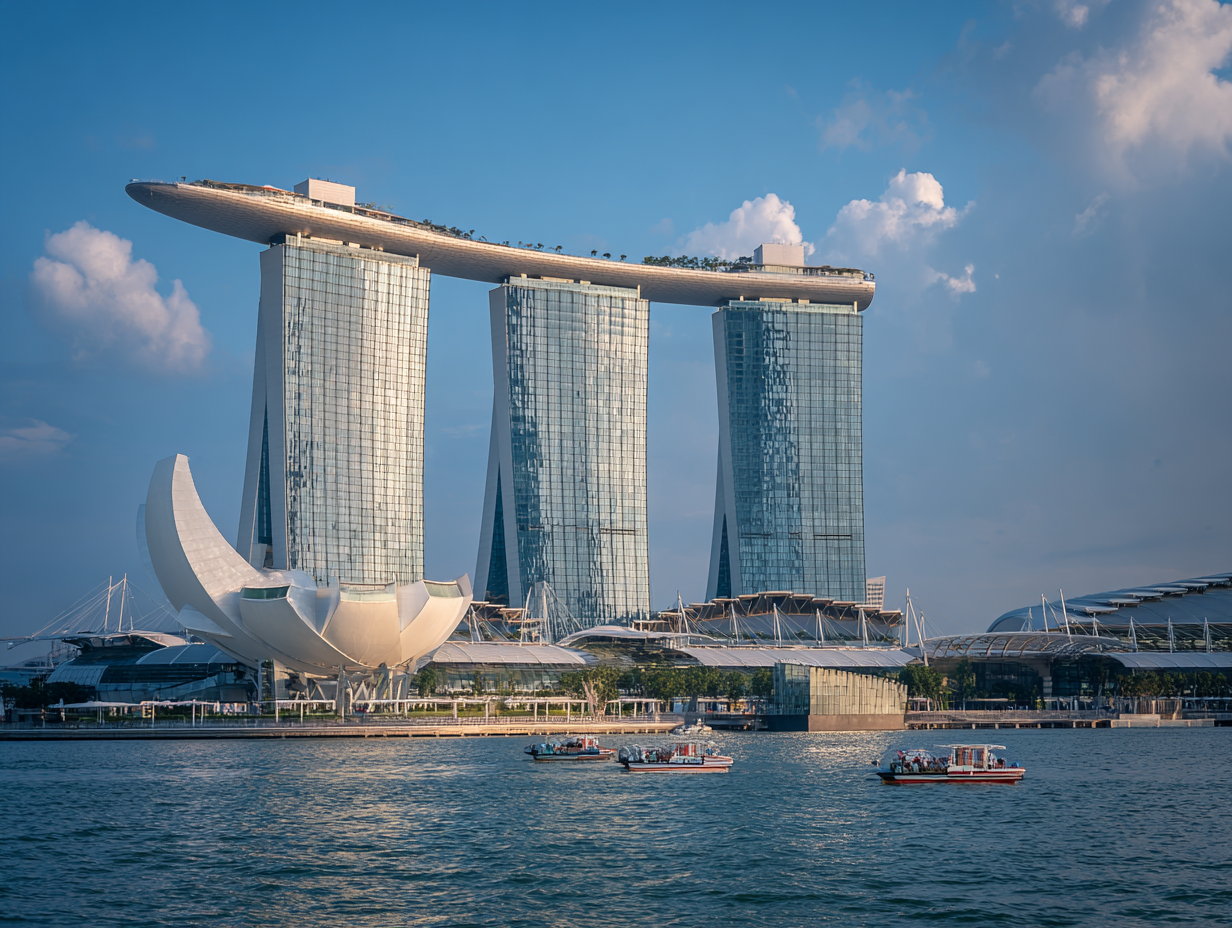
Marina Bay Sands was completed in 2010 at an estimated cost of $6.8 billion. The iconic building stands out as a symbol of modern Singapore. The building comprises three towers that are connected by a platform that stretches across the sky. The complex comprises a rooftop SkyPark with gardens, restaurants, observation decks and the world’s largest rooftop infinity pool. The complex also comprises hotels, a convention center, theaters, luxury shopping, museums, and a casino, making it a self-contained entertainment city.
International Finance Centre, Hong Kong
The International Finance Centre (IFC) in Hong Kong is one of the costliest commercial developments in the world, with a construction cost of approximately $6.4 billion. This development was completed between 1998 and 2003 and includes office space, a luxury hotel, and upmarket retail facilities along the harbour front. The top floors house prominent global financial institutions, establishing Hong Kong as a financial hub. Its modern architectural landmark and appearances in blockbuster films have reinforced its significance in both culture and architecture.
SoFi Stadium, California
SoFi Stadium, located in Inglewood, California, was completed in 2020 with a construction budget of approximately $5.5 billion, making it the costliest sports stadium ever constructed. The stadium has a seating capacity of 70,000 and boasts a translucent roof and a massive double-sided video board. The stadium was constructed on the site of the former Hollywood Park racetrack and will host major sporting events such as the Super Bowl. It will also host the Olympic Games in 2028.
The world’s most costly buildings illustrate how architectural design can integrate religious belief, commerce, entertainment, and national identity into massive physical structures. Ranging from the religious majesty of Masjid al-Haram to the futuristic entertainment space of Marina Bay Sands and the technological wonder of SoFi Stadium, each building embodies distinct human values with an unprecedented level of financial expenditure. They collectively illustrate that the value of iconic buildings goes beyond mere financial expenditure to encompass their cultural significance, innovation, and global significance.